 Posted by
 As someone with EDS, POTS, MCAS and a cluster of other conditions, I spend a lot of time indoors. I can get to the communal lawn to feed the birds on good days but, mainly, I’m houserealmed*.It’s unavoidable when your flesh suit decides it’s going to make your toes click out of their sockets; your ankles turn, or swell to three times their size because you did some housework**; the backs of your knees do similar; your hips click into a nerve-trapping position that brings daggers with every step; your body decide it’s going to react to your own hair, let alone other people; your brain explode in a pain-bomb so intense that the smell of food – or anything – sickens you, light and noise stab you, eating is impossible without vomiting and the only solution is taking meds and hoping the pain numbs enough for sleep to come; or you’re just faint and/or exhausted from living inside a body that is too stretchy and reactive to function as it ‘should’.
On the plus side, it means I’m good at staying in the house. Really good. Should you find yourself stuck at home, bored and skint, here are some tips – most of which can be done from bed, with the help of a bed-desk or tray with a generous lip (I’ve used a pizza box as an easy-to-contain-crafts making surface before).
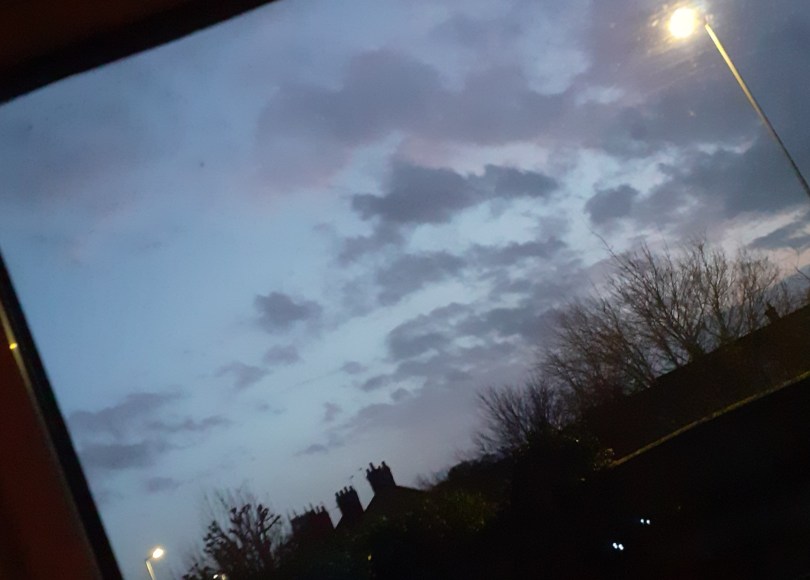
- Engage with nature. Just because you’re stuck inside, it doesn’t mean you need to look at the same four walls. Clean your windows and look out of them. From dawn ’til dusk, you can watch the wildlife and weather: birdlife returning to the UK; clouds telling stories; raindrop races on window panes. And at night you have all the stories in the stars. Look outside – and maybe take photos to share on social media. Nature Twitter is friendly, welcoming and will help you learn to ID what you see.
- Try crafting. The end result doesn’t matter. The object is to entertain yourself. You don’t need expensive crafting kits, though a glue gun, PVA glue and ecoglitter are a few things I do buy. But if you have scrap paper, try origami tutorials on YouTube. If you have fabric and needle/thread, make something to wear – or turn a tired old jumper destined for the bin into a cosy cushion. Just chop the arms off, turn it inside out, stitch almost all the way up, turn the right way round and stuff with clean old pillow stuffing. Turn old tights into draught excluders. Make papier mache sculptures (use white glue and kitchen towel rather than newspaper and paste, for a faster setting and easier method – thanks to StrangeCurious on Twitter for this magical secret). Look at your recycling box and let your imagination play.
- Make a mini garden if you have ready-meal packs and a garden to collect soil, moss, tiny plants and pebbles from. You can also use a chipped plate or plant pot saucer as a base. Decorate with discarded small toys, broken jewellery or shells/pebbles collected on holidays. Plant seeds. Don’t forget to water it. If your garden includes moss, a water spray will help keep it looking fresh.
- Try aromatherapy. There are many great kits you can order online. It’s not cheap for good oil – £5-15+ per oil for decent quality depending on how rare or hard to extract it is (I like Neal’s Yard and Phatoil oils). However, you don’t need hundreds and they last ages properly stored in a cool, dark place. I’d choose vanilla and lavender for relaxation, rosemary, orange and peppermint to perk me up/wake a flagging brain, vanilla, patchouli and cinnamon for comfort, wintergreen, ginger, pine and eucalyptus for medicinal Deep Heat style rubs and cedarwood and pine because I love the smells. Pick one from each category (except the latter – go with your own preferences, obviously) for a basic starter kit. Add a few drops to sunflower or almond oil (standard store-cupboard sunflower oil is fine). Make sure you get aromatherapy oils not just aroma oils. The latter are generally synthetic (and give me a a near-instant headache or migraine). Can’t be bothered to make blends yourself? I adore Aromatherapy Associates blends: they do what they say they will, unlike many ‘relaxing’ (etc) oils – sign up to their generous loyalty club to keep prices down
- Make toiletries. You can also make toiletries from standard store-cupboard ingredients, with minimal faff and mess. As an added bonus, it saves a fortune and you can create allergy/reaction-free blends with a scent of your choice, or no scent at all. Just add oats to cold water for a soothing face mask. Add hot water to oats in a jar (25% oats/75% water) and leave for an hour, shaking well to mix, then strain to make a basic cleansing milk that leaves skin soft. Add used coffee grounds to rough salt, oatmilk and honey for a morning body scrub, use old teabags or cucumber to soothe tired eyes (ideal if you’ve been using a smartphone or computer lots: take screen breaks for eye-health), and use old banana or greying avocado as a soothing and moisturising mask. Now, you can have a home spa for a bargain price. Reuse old toiletry packaging to make it feel more glam (and reduce waste/keep costs to a minimum).
- Listen to podcasts. My favourites include RHLSTP (funny, unique, often moving interviews, mainly with comedians), anything by Jon Ronson (excellent journalism on quirky subjects with heart and depth), Scroobius Pip (wit, warmth and eloquence) and Su Perkins (both her podcast and new natural history comedy panel show on Radio 4 as she is one of the funniest women alive). Victorian Scribblings, Bookshambles, Cosmic Shambles and the Festival of the Spoken Nerd podcasts are all on my list too.
- Call friends. Social contact doesn’t have to be face to face. Relive your teenage years with long phone calls to good friends – particularly if you think they’ll be lonely. And don’t be scared to admit you get lonely too – often, people assume others are busy. If you’d like more social contact, let people know (in a non-blamey way to avoid it having the opposite effect). And if you have limited energy – or the person you’re calling does – set an energy window at the start of the call (eg, “I’ve only got about ten minutes of spoons”. You can always mutually agree to extend if you get sucked into an interesting conversation and want to push your energy envelope.
- Write that book. If you’ve long had plans to write a book, use your time at home to write it (assuming you don’t feel rotten). Even 200 words a day will become a book eventually. Need help? My book, Write Now! Get Your Book Out of Your Head and Onto the Page is £1.77 in eBook form and £6 in paperback, and is based on 20+ years experience writing 30+ books that have been translated into 9+ languages. Best of all, it’s only 50 pages long, leaving you as much time as possible to write.
- Make art. Draw, paint, do collage or decoupage (covering frames or furniture with magazine cut outs and PVA glue/Mod Podge until there’s a lacquered finish). Try zentangle doodling if all you have is pen and paper. Forget about the result. Just enjoy the flow.
- Cook. If you feel well, and are able, batch cook for times you feel less well. Chopping vegetables for soup can be mindful relaxation (a food processer can help hugely if chopping is painful), and the smell of fresh soup bubbling makes a house feel like a home (A slow cooker reduces effort hugely – just add all the ingredients and leave it to slow-cook then blend if you like a creamy soup.) Ditto cake (my go-to recipe: weigh eggs. Add equal amounts of flour or ground almonds as a gluten-free alternative [if you can eat almonds: it’s delicious), sugar, butter [or vegan alternative] and any spices you like. Cook at 170ish until your home smells of cake. It’s done when a skewer through the middle comes out clean)
- Read a good book. You know those books you’ve been meaning to read for years? Take them off the shelf, blow off the dust and read them. And if you run out, download ebooks – you can read them on a smartphone with the free Kindle app. Not sure what to read? Check out this list of nature books – or visit Ciadish.co.uk for reviews of loads of brilliant books by chronically ill and disabled people.
- Netflix and chill. And yes, of course you can still do that if you’re on your own (and toys can double as massagers for painful joints or muscles: turns out the ads for ‘intimate massagers’ were right).
* (I prefer houserealmed to housebound (Check out the Borg.Diem Dictionary by Disabled People for more new words). My flat is a wonderful realm, complete with fae festival that started on a table and has extended out to fill half a room; disco-ball spa bathroom – admittedly small but full of plants and fairy lights; plants and miniature gardens, hampers full of (largely recycled) crafting and aromatherapy stash and self-care kits, musical instruments (ukulele and kazoo as they’re cheap – though musical instruments sometimes pop up on freecycle sites, particularly pianos), books galore and the whole of the internet.).
** It’s really hard to walk on round ankles

 groweatgift
Ok now the pain I get in my hips makes a lot of sense…I had thought it related to hypermobility but it is *really* good to hear someone else describe it like that-as in exactly the same. I have few other symptoms unless i try running which gives me migraines these days anyway so…every cloud!
Thanks for the podcast recommendations; I’ve been listening to a lot more recently but I’ve added a few more to my list now. When i can’t bear to watch a screen its great to have these as an option. Great idea for a blog!